Criptic Critic Conscience and Known for it

Showing posts with label Chris Kraus. Show all posts

Thursday, September 3, 2026

"In Dunedin, New Zealand, she meets Tao Wells, who sparked outrage with a grant-funded project that proposed unemployment as a route to sustainability." - Chris Kraus on Tao Wells. Financial Times, Max Liu. Nov. 2018

  "In Dunedin, New Zealand, she meets Tao Wells, who sparked outrage with a grant-funded project that proposed unemployment as a route to sustainability. Back in the US, she talks to Thomas Gokey, co-founder of the Rolling Jubilee project, which, Kraus explains, “raised money to buy up millions of dollars of bundled debt and then wrote it off to start a conversation about the nature of debt”.

Money is the subtext of several essays and the question of who can afford to make art is one of Kraus’s urgent concerns. “I see a distinction between artists who can afford to play the long game and those who must play the short game,” she says. “The latter are sneered at as hustlers and hype-merchants, but they’re usually people who need to make money quickly. It’s a matter of access which is connected to class.”

Many of the artists Kraus writes about live, she says, “off the metropolitan grid” (Vera in Mexico, Newby in Germany, Wells in New Zealand). Is this the inevitable consequence of the rocketing cost of living in major cities?"


Books 


Chris Kraus: ‘I’m reaching out to people’ 


 The novelist and art critic talks about her travelling role as a pollinator of ideas

 Writer Chris Kraus at the New York Botanical Garden © Sasha Arutyunova/The New York Times. 

When I arrive at the Royal Academy of Arts to meet Chris Kraus, I find the American novelist, art critic and publisher sitting at a desk in a life-drawing studio, signing copies of her new book for a group of students to whom she’s just delivered a lecture. “Email me,” she tells one woman, then laughs, adding: “I promise our conversation won’t end up in a book.” 

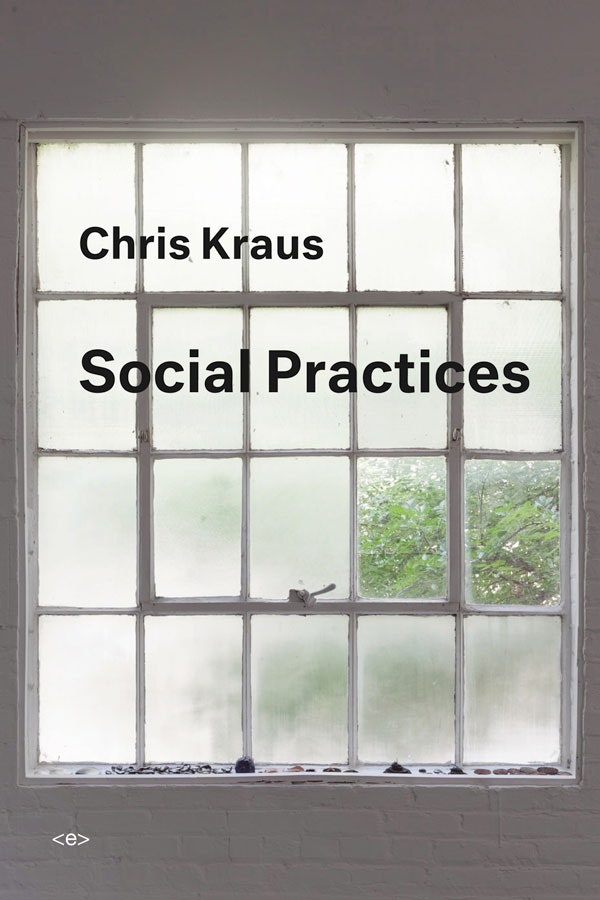
I wouldn’t be so sure about that. Correspondence is central to Kraus’s work. In I Love Dick (1997), the first of her four novels, Kraus used the epistolary form to blend fiction, autobiography and feminist polemic. Social Practices, her new collection of 26 essays, features transcripts of conversations with artists, as well as a surreal account of a seven-year email exchange with a Romanian woman who wanted Kraus to write about her. 

When the students have gone, I sit down with Kraus over coffee and ask if it’s important to her to be available to her readers. “Definitely,” she says. “In my writing, I’m reaching out to people. I never want to work on a scale where I can’t be available to things that interest me. I don’t need a filter.” 

At 63, Kraus has more readers than ever. I Love Dick was reissued in 2016, at the same time as Sheila Heti, Leslie Jamison and other members of a new generation of women writers cited its influence. The following year, it was adapted for an Amazon TV series starring Kevin Bacon and Kathryn Hahn (Kraus is apparently tired of talking about it, so I don’t go there). Its narrator is a writer who is obsessed with a professor of art, while the protagonist in Kraus’s most recent novel, Summer of Hate (2012), is also an art critic. Her fiction can be essayistic, while her essays often read like fiction. Does Kraus see her novels and her art criticism as part of a single project? 

 “Yes,” she says, speaking softly but fixing me with a firm gaze. “I don’t understand why people are so insistent on genre divisions. When I write, I start with an idea, rather than considering what form it’s going to take. All parts of my life are tied up with the art world.” 

 The essays in Kraus’s new book were written over the past decade and a half for exhibition catalogues or Artforum and other magazines. They reflect her interest in conceptual art with a social agenda — a subject explored in her 2004 book Video Green: Los Angeles Art and the Triumph of Nothingness. She is a warm, witty critic, so it’s easy to enjoy her essays regardless of whether you are familiar with the artists she writes about. As Kraus says: “My essays aren’t analytical or discursive. I try to reflect the spirit of the artworks I’m writing about.” 

 The hilarious opening essay, “Trick”, isn’t really about art. It describes Kraus’s experiences of working in strip clubs in New York’s East Village in the late 1970s. “My job was to hustle men into buying ersatz champagne,” she tells me, “which is funny because now I’m writing about the art world as a hustle.” 

In the final piece, “Resistance”, Kraus combines meditations on seemingly disparate subjects — a plastic coffee scoop, a found letter, the story of Walter Benjamin’s 1926 visit to Moscow — in a beautiful collage essay about loss. 

In between these autobiographical pieces, Kraus travels the world, meeting artists. “I’m like a pollinating bee,” she says, “bringing news of one group to another.” With notable exceptions — such as the photographers Ryan McGinley and Kate Newby, from the US and New Zealand respectively — the artists in Social Practices eschew traditional mediums. Why? “The humanities have become degraded and are migrating into the art world,” says Kraus. “Ten years ago, independent film moved into the gallery and now we’re seeing something similar with literature and theatre. People are doing things like teaching, translation and activism under the rubric of art. It gives them more cachet and a wider reach.” 

 In northern Mexico, in Mexicali, Kraus visits Marco Vera, who has set up a cultural centre that is bringing together everyone in the local community, from scholars to gangs. In Dunedin, New Zealand, she meets Tao Wells, who sparked outrage with a grant-funded project that proposed unemployment as a route to sustainability. Back in the US, she talks to Thomas Gokey, cofounder of the Rolling Jubilee project, which, Kraus explains, “raised money to buy up millions of dollars of bundled debt and then wrote it off to start a conversation about the nature of debt”. 

 Recommended Life and Art from FT Weekend Chris Kraus on the FT culture podcast: listen to the author discuss sex, autofiction and the ‘flawed female protagonist’ Money is the subtext of several essays and the question of who can afford to make art is one of Kraus’s urgent concerns. “I see a distinction between artists who can afford to play the long game and those who must play the short game,” she says. “The latter are sneered at as hustlers and hype-merchants, but they’re usually people who need to make money quickly. It’s a matter of access which is connected to class.”

 Many of the artists Kraus writes about live, she says, “off the metropolitan grid” (Vera in Mexico, Newby in Germany, Wells in New Zealand). Is this the inevitable consequence of the rocketing cost of living in major cities? 

“People are moving to more affordable places,” says Kraus, “so smaller cities have become important in the international art cosmos. In the UK, Glasgow is the obvious example. Yesterday, I gave a reading at TOMA, a free art school in Southend-on-Sea. Recently, I was in touch with artists in Lyon. London and New York are where commercially viable work is exhibited. But they’re not where art is being made.” 

Where would Kraus go if, like the students she met at the Royal Academy, she were starting out on a creative life today? “Oh my god,” she says and, for the first time, sounds stumped. After a moment, she says: “I’d live in a cheap suburb within a reasonable commute of a large city. Or I’d find a free study programme. Wherever you are, you have to meet your peers.” 

Social Practices , by Chris Kraus, The MIT Press, RRP £13.99/Semiotext(e), RRP $17.95, 296 pages


Sunday, July 24, 2022

Chris Kraus: Social Practices By Gretchen Coombs - The Brooklyn Rail


Art Books

Chris Kraus: Social Practices

If the last decade or so of social practice art has presented artists with different ways of working in the world—not unaffected by history, not without compromise or complicity with the art world, not without material—then Social Practices by Chris Kraus, published by Semiotext(e), takes a different position. Kraus's book is not about social practice art, necessarily, but her selection of essays and interviews unfolds social practice projects and some of the persistent debates that come to occupy its discursive and critical sites. The collection is composed of previously published essays and interviews written over thirteen years (although some of the events take place in the 1990s). It is cut through with tensions of art world success, premature death, and the social and economic issues confronting artists and culture at large—displacement, gentrification, debt—along with questions of how artists are to live and work within these conditions. Kraus exposes the visible cracks of social practice and the institutional structures on which they hinge. Her writing is conversational yet critical, engaged yet incisive, with elements of chance, memory, and travel animating each entry. Instead of chronicling each essay, I follow some of the patterns of social practice she forms throughout the collection, as well as her writing about Los Angeles and environs, highlighting successes and failures of the genre.

The term "social practice" itself has its roots in psychology and refers to how one's practice engages with social contexts through activities and critical inquiries: it's a methodology, a way of doing things. Coupled with "art," social practice takes the "social" as its medium, in form and content (engaging with societal, economic, and political issues) and involves finding new ways to work with communities, audiences, and publics on short- and long-term projects. As historian Grant Kester has pointed out, it has become the institutionalized version of socially and politically engaged artwork and arguably also the community arts tradition. It stems from a desire to create art that makes a difference, to be relevant as an artist, to form alternative economies, and to find a way out of the highly commercialized art world.

Social practices constitute an aggregation of methods, and Kraus argues this is partially due to a professionalizing of art and the dissolution of the humanities. As a consequence, these orphaned disciplines migrated to the fine arts, distinctive from community arts, but more relevant than the "social utopias" and gallery-based work of Nicholas Bourriaud's relational aesthetics. And so, in 2005, California College of the Arts' Art & Social Practice MFA was born filled with well-intended students—artists, activists, and designers clamoring on about participation, social justice, intervention, community, publics, and aesthetics. As social practices gained popularity, projects that sometimes do nothing more than create temporary situations, often rather convivial, and which have been absorbed into participatory culture, have become the face of this genre. This shift, for Kraus, has led to a lack of credibility, causing many artists to distance themselves from its nomenclature while still benefiting from the commercial and educational structures supporting the discipline. Thus the term "socially engaged art" is used more often, which mandates a social or political engagement (though all social practices need not be political); it's not political art, but doing art politically.

Kraus's case studies unfold against the mysterious geography of Los Angeles, so vast and filled with promise and lost dreams. She excavates LA's 1990's art scene as it transformed from artistic outpost to the global city it has become. "A Walk around the Neighborhood" takes readers through Mt. Washington (an artist enclave northeast of Los Angeles) to stand on the balcony of a Craftsman Bungalow and encounter artist Delia Brown and her Pastorale—a rumative film about youth and privilege—as we bask in the California sun. In Highland Park, we meet artist Daniel Mendal-Black as he details the changing nature of his gentrifying neighborhood. Down through Chinatown and Bunker Hill we pass through Joel Mesler's gallery Pruess Press and learn about how, in the early 2000s, musicians and artists gathered and recorded on their own terms, in defiance of the music industry during a time before the area's redevelopment. Her journey chronicles the way artists witness, document, and respond to these shifts in their neighborhoods. The performative, collective, or communal artwork finds its roots in cultural traditions tethered to the local.

"Kelly Lake Store" describes a project (ultimately rejected by the Guggenheim Foundation) in Minnesota where Kraus proposed making a country store into an artwork. The store would highlight the depopulation and dereliction of small towns across the U.S. and include an operating business on the vacant lot, bringing students in to participate and local residents to work the shop. Her Guggenheim proposal resonates with many artists whose practices draw attention to and hope to ameliorate pressing issues confronting urban and rural communities. Kraus's essay suggests students enter MFA programs to become teachers, archivists, and small business owners because these types of community-centered activities are no longer valued, but find visibility in contemporary art's elastic discourse and definition.

"Radical Localism" confronts the specific challenges facing border towns. Kraus presents a portrait of Marco Vera's Mexicali Rose, a neighborhood center with long time ties to the area. The center programmed video classes, art exhibitions, and a film club in Pueblo Nuevo near the Mexicali border. Mexicali Rose lasted five years, and during that time, it "strengthened existing ties amongst residents of the Pueblo Nuevo community and created a larger one of its own." These aren't artists coming in to do work (the proverbial "fly in fly out" kind); they are from the area, invested in maintaining what is quickly disappearing.

Understanding if and how a given social practice project evolves and has impact over time with local populations has been a persistent question for artists working in this capacity. Lost Properties explores debt with the Rolling Jubilee, a group of activists and artists who help eliminate student and medical debt, raising money to buy debt for a fraction of the actual value, and then abolishing it. Kraus follows Thomas Gokey, a founding member of Rolling Jubilee, from his early career at LibraryFarm with partner Meg Backus, to his time with Occupy Wall Street, to his founding of Rolling Jubilee. Elsewhere in the essay, Kraus's details Felicia von Zweigbergk's Lost Property, located in a low income primarily immigrant neighborhood in Amsterdam. The artist-run space functioned as a conceptual bar and for Kraus, defied the do-gooder model where artists come from outside and try to fix a neighborhood. Now defunct, the space did not attempt to change its surroundings; there was no community outreach nor did they feature neighborhood art. "The project makes no spectacular claims and remains free of embarrassing zeal about nonexistent communities." Instead it acknowledges the only true common ground shared by immigrant tenants and artists: "all would prefer to be elsewhere."

An essay from 2018, "The Happy Beneficiary," lands us in Wellington New Zealand, and it is here where I found her critique of social practice the most explicit. For The Beneficiary's Office, Tao Wells set up a public relations company called The Wells Group, which asserted that the average unemployed person has a smaller carbon footprint and consumes less, therefore causing less harm to the planet. This argument ignited debate, and many in the local community did not see or understand it as an artistic provocation. Summarizing Tao Wells's work, she writes, "his community conceptualism has little in common with the intention contemporary art genre knows as 'social practice.' He won't be moving on to the next international site of misery… Like Mexicali Rose, and artists who've exhibited at Mexicali Rose, Wells is a permanent member of the community he interacts with." This may be a fair assessment, but I'd argue there are powerful short term works (for example, in 2006 Paul Chan staged four outdoor performances of Samuel Beckett's Waiting for Godot in the New Orleans neighborhoods worst hit by Hurricane Katrina). Public responses to the work give focus to the challenges faced when audiences experience a social practice project but are unaware of it as art. For Kraus, Wells's work illustrates how bound activism and art have become, doing what traditional activists' tactics alone could not. More explicit activist work is common motivation for artists working in this genre, and I would suggest the creative forms of activism occupy one end of the spectrum of social practice art.

Another aspect of social practices is the presentation of the bohemian counterculture artist, which Kraus explores in the work of Ryan McGinley in "Pseudofiction, Myth and Contingency." In the late 1990s, McGinley, while himself in his early-twenties, photographed his friends, capturing youth from New York's Lower East Side. His decidedly bohemian, sometimes naked, but expressively free images define his work through the 2000s (described by the artist as "pseudofiction"). They form, for Kraus, "the haphazard elements of everyday life to create an incandescent illusion of freedom and beauty." Many of these pseudofictions harken back to a 1970's lifestyle, a time when artists were "unburdened by debt or career, countless young people simply traveled, and an 'artistic life' could be lived without being professionalized." Kraus draws on Roland Barthes's Mythologies to understand how such imagery can "convey a sense of the real" and subsequently hold up false constructions about how artists can and should be able to live.

"It's Very Sad, Really," a conversation with poet and critic Quinn Latimer considers how, as a genre, social practices (along with other wayward disciplines) appropriates, subverts, and borrows from other professions and disciplines by using critical theory to trespass into other disciplines, finding refuge in an institutionalized art structure that is willing to embrace "reduced and simplified" strays of the humanities. For Kraus, the "art world" now stands in for any remnants of a counterculture since the former needs a welcoming home and the latter has been commodified, now requiring art's ability to offer counternarratives. The limitations of art-based research and the post-MFA impulse to excavate some sort of meaning in well-intended projects is made explicit as she reflects on her experience with the Concord Collective. As Kraus points out, artists whose projects "pass" in the art world, yet remain on the fringe, may well be the only remaining counterculture, where activism can flourish and reinvigorate political and socially engaged art; both protected by and complicit with the structures that define them.

Kraus's portrait of Los Angeles is in some ways analogous to my understanding of social practices—the inability to grasp it fully, only ever glimpses, whether it be the art project itself, its effect, or the people for whom it's designed. The vastness, the promise Los Angeles's artistic culture had before it faded is akin to the promise the social practices genre had; both are now at risk of being swallowed by marketable residencies, MFAs, grants, and of fading away when the next genre steals the spotlight.

With such a heavy suspicion for what the genre now includes, Social Practices as a title didn't make sense for this collection, unless we see it as her social practice, made explicit in the last line of the book, where Kraus proclaims, "Write when you can. Your letters are welcome." So I did, to ask about the title. In her response, she claims the title is, "sort of a joke, and also a statement: that art always involves a 'social practice' of some sort . . . trying to redeem those two words from the prissy genre it's come to connote." The educational structures that support social practice engender critical thinking, ethical acts, and formalized processes. Released from institutional bounds, artists go into the world and try and change it. While some are misguided and "prissy," I'd contend that many find their professionalized degrees better position them to function in a neoliberal economy and able to link up with the remaining counterculture.

Saturday, August 15, 2020

"Wells is a permanent member of the community he interacts with. " - Chris Kraus. The Happy Beneficiary, Tao Wells. Social Practices. Semiotext(e) Active Agents Series. 2018

Except, I left NY to come back to NZ to go a few rounds. It was 1999 and I was ready to see what I could do. As a (Nrth) American made New Zealander, Pākehā manuhiri. Three years later I'd found Enjoy Contemporary Art Gallery.

And my own practice had divided an entire Fine Arts Academic Staff. A sport where I played no victim, no innocence all transparent practice. Visible maneuvers on a very limited board. I played at being powers equal. 

People talking to people, isolated by perspective and access, through society trumpets, mechanisms of mass movement symbolisation. Feelings crystalised into economic structural architecture. Songs to say something.

Both the listening and the saying must be enjoyed. Delirious ineffortlessness. 

NY was small time for me. A lot (_) of misdirected effort to finally be let into a small room full of all the children who ran away from small towns to sit in a small room. Where I was suppose to be impressed by the address, the proximity to the park. I liked the park, but as a NZer, it was like someones back yard, it's not a park. No mountains, Forests bush, rivers and cliffs. 

That was 20 years ago, I returned to where I felt I could choose a fresh path and not one that had already been traveled by a million before me. here in NZ i could feel the gaps, where the nets ran thin and then completely out. Spaces of untrapped isness, you can be swallowed by or swallow, either way, when I think of these times, the Te Reo that I would hear, in these places, the voices, the ways in which it made me feel. What I think I was told. The details I felt were so important, that meant something to me. Told me a story, some mainframe, still accessible.  Nature scares the shit out of me now, it majestic power now a suicidal maniacs hollow laugh, as they push on through to the other side, knowing completely that there truly was no one and nothing here for them, that was interested in connecting to them. They did not exist. Just the laugh to pass on through. 

I say this because this I want to do an art work, that has scared the shit out of me for four years. I've wanted to do it. I've wanted to so badly. I'd start and stop. Start and stop. Meeting indifference and barriers, prejudice and confusion. Scared everywhere, scars, tiredness. I resolved that I was not in the right mind to attempt such a work just then. That I would have to work towards it. Become ready, feel the arguments inside me as natural as my own blood. Have the responses the cleverness of what I wanted to say and do, down before I leapt. I now believe that I may be ready. The tipping point, having just been purchased in a can of coke, not thirty minutes ago. 

Coke. Kuia

Share a Coke with Kuia

That's what it said. And I feel that this gives me a certain right to engage with Te Reo Māori from a Pakeha's point of view, and one that would like the expression of te reo to be far more equal than it currently is. Not for the novelty, but for the connection the language has with the spirit of this land. The way it describes a living connection to the life here on these hills, and seas. This living connection is what I believe at it's most abstract, is a positive healing force that is missing mostly from European, or just English speaking people. Not that english is particularly dead, I feel it is recognized for it's somewhat neutral like qualities, this perhaps existential aloofness has been raped cleanly by capitalism.

The work I want to do, is a plein air painting, performance, with a video, of me at dusk standing in the fjord, in front of a large frame of white stretched and sewn bed sheets, where I carve out the word PIOPIOTAHI, with a stick and paint the name of what is also called Milford Sounds. It's not great controversy, but it should be, that Dunedin and the south island in general seem about ten to twenty years behind what I've experienced in general in te Ika a Maui. This particular phenomenon particularly stung me. As Piopiotahi is a sacred place to me, part of my own childhood mythology, a site of pilgrimage and the focus of earlier art works. Homers tunnel, and the story that I think I have heard but cannot verify about Maui's father, returning as a bird to this place, to die mourning for his son. Lamenting the mistake he made. 

I am a son who has had to leave his father. I am father who wishes to speak to a new father. But through a willingness to engage with the fabric of democracy as a language of access, permission to speak.  Te Reo Maori is an official legal language, with English and Sign language. I'm not free to abuse any of these, I can engage with them. It should be allowed, encouraged and it is. Mistakes will be made and developed on from. This issue has been in the last four years a topic of regular disasters, from polarized moko opinions, to the use of te reo by corporates and private businesses, cashing in on culture. I work for the state, for now. I volunteer my time, when I am not looking for full time work, to the democracy that pays for the roof over my head, food in my belly, warmth on my skin. It's all rather dull and obvious really. Basic nuts and bolts. But the architecture is in the sky, and the theory must eventually be tested, fail or no fail. Who will do it. Who wants to. 

If you live in the Dunedin area-ish, and happen to be keen to help me do this painting, shoot video, pictures, probably around 20 hours in one total span. Profit shared 50/50. Please contact 027 825 0088


Monday, December 2, 2019

Review of Chris Kraus's Social Practices, by Commonplace review " “I’d add that posing contradictions through art functions as something like an immune system--it sounds an alarm and acts as a catalyst for consciousness. It seems necessary to self-implicate in order to ask certain questions.”

https://www.commonplacereview.org/lit/2018/9/6/3ulqh2z4jcr6fnxwlq3kwmphu0ntbl

Heroes and Humans - Since When by Bill Berkson and Social Practices by Chris Kraus

SINCE WHEN: A MEMOIR IN PIECES   by Bill Berkson. November 2018. Coffeehouse Press. 280 pp. 
SINCE WHEN: A MEMOIR IN PIECES by Bill Berkson. November 2018. Coffeehouse Press. 280 pp. 
“Always meet your heroes.” That’s the advice the late poet-critic Bill Berkson received from fellow poet Robert Creeley and which he reiterates in his memoir Since When, forthcoming from Coffee House Press. The idea is that meeting your heroes humanizes them. No more pedestals and glamour lighting or conclusions formed from a distance. Behind each ostensibly great artistic personality is a complicated human being with dear and messy personal relationships, or perhaps someone with whom the compatibility just isn’t there. And then there are the individuals who exceed expectations and who, seen in new dimensions, reveal ever fascinating and convoluted expressions of what humans can be. The result of meeting heroes is not necessarily to do away with admiration, but to arrive at a more nuanced conception of a person and to bring art into the personal sphere. One need not be revered as a god to be admired; one need not be perfect to do great things. Responding to a letter from a teenager, Frank O’Hara once wrote in Ingenue Magazine, “It is never in poor taste to admire anyone, except possibly Hitler. It is especially important to admire an artist while he is still alive, so that he may have some pleasure and comfort as a result of his efforts.”
Frank O'Hara and Bill Berkson, 1961
Ostensibly a posthumous memoir, Since When is more of a collection of intimate portraits of Berkson’s artistic companions, many of them his heroes, than a biography, although Berkson implies in this composition that a life lived is indistinguishable from the impacts of individuals upon it. Few details, indeed, can be drawn directly about Berkson himself--namely, where he went to school, his family history, where he lived, and who he was acquainted with. After a brief, fairly dry autobiography, Berkson proceeds into his collection of anecdotes and letters about and to such individuals as Philip Guston, the de Koonings, Frank O’Hara, and John Cage--it’s more or less a Who’s Who list of the New York School and its associates. There’s an undertone to the thing, less along the lines of bragging and more of an implication that anyone can have such encounters, that great artists are not many steps away.
Since When is a sentimental prayer to the great artists Berkson knew, not unlike a bittersweet and light-hearted speech delivered at a memorial service. The qualities of artistic work he describes are as anecdotal as a memorable encounter at a party. For Berkson, artistic greatness, even artistic greatness, is in service of what is intimate and personal. Art is not necessarily a path toward transcendence, but toward connection and engagement. “All the arts, poetry included, involve a great deal of collaboration: poetry collaborates with other poetry, with language, with experience, cognition, general culture,” Berkson writes in his ode to Frank O’Hara. When musing on Joe Brainard, he goes on to add, “Poets and painters collaborate partly for the same reasons that painters make portraits of people they know--it’s another way of spending time with that person, and the artistic aspect lends an extra, more surreptitious, intensity to the get-together.” It is difficult to read Since When and not slip into a longing for connection or a deep appreciation for one’s own friends. Be it the rose-tinted frames of nostalgia or the consequences of technological estrangement, but I often catch myself dreaming of collaborations--it is, in fact, one of the reasons why I personally have been driven towards criticism and ekphrasis as forms of artistic expression.
Amiri Baraka at the National Black Political Convention, 1972. Gary Settle/ The New York Times .
Amiri Baraka at the National Black Political Convention, 1972. Gary Settle/The New York Times.
In his own way, Berkson seems to address the issue of art vs. artist, that tried question regarding whether a work of art can be judged in isolation from the actions of the artist. It is a question which often measures the merits of both the artist and the artist’s work largely on the basis of their moral contributions. Yet Berkson does not seem to factor the moral qualities of either the artist or the artist’s work in expressing his admiration, quibbles, and appreciation. Even in speaking of Amiri Baraka, Berkson grants only a few sentences to Baraka’s Marxist-Leninist-Maoist radicalism and acknowledges his own petit bourgeois trepidations. The political tenor of Baraka’s work is anecdotal--Berkson gives much more attention to his use of tone and the tension in his friendships. This is not to say that Berkson disregards morality--in his focus on relationships as precedent to (but not necessarily inextricable from) art and politics, he asserts his own ethos, one which ultimately values enrichment achieved through interpersonal experiences. Art, for its part, is simply a potent tool through which humans can explore themselves and each other.
Philip Guston, "Awakened by a Mosquito", circa 1972-1975, collaborative poem-picture with wife Musa McKim, ink on paper. Photo by Genevieve Hanson.
Ever tactfully (and many of his friends and family did refer to him as gentlemanly), Berkson side-steps the art-artist problem. This is not a text which either holds the artist to be distinct from their work or which dips its toes into whether or not a platform should be granted to the work of the artist-gone-bad. He subverts the paradigm of the artist as servile to artistic goals, be they to create masterpieces or achieve social change, toward that in which our artistic creations build upon and contribute toward how we give attention to those around us. Yet who today can touch music, comedy, or literature without stepping into an argument about the separation of artistic work from an artist’s behavior (if it may even be called behavior, but to call it personality or ethical code seems like opening up a can of Kantian worms that I’m not sure I’m prepared to deal with)? When art becomes involved in power structures, such an approach to the artist’s relationship to art as that may be drawn from Berkson’s final adieus quickly devolves into what may be perceived as doe-eyed optimism.
When art and education are commodities entrenched with the potential for individuals to support themselves under a capitalist framework in which cultural capital can be exchanged for a livelihood, hierarchies of power naturally emerge that become often difficult or impossible to parse from the art itself. Artists begin to view platforms for sharing their work as finite and covetable--they become concerned with what works are allowed into The Canon, which individuals deserve to have their art seen, and where power aggregates at the detriment of others. Art, being one of the most accessible forums for change for the disenfranchised artist, confronts these structures of power and acquires an association as a weapon, in addition to (or often at the expense of) its interpersonal value. Its weapon-quality obtains its own cultural capital, often in spite of the systems it seeks to subvert, and a system is established in which art quivers between its means of personal enrichment, its value as a tradable good, and its effectivity as a weapon.
It is not, therefore, difficult to imagine how quickly morality and social responsibility becomes intermingled with art. It’s funny--taste and ethics are not so different; both are enormously difficult to define, both can be loosely agreed upon by a society, and the edges of both waver through time and place. Art, too, has a tendency to resist the designation to particular hours and place that alternative forms of labor (whether art is labor I am not entirely sure). Art drifts from the hours of silent reverie into the night, swirling around those who engage with it into their social spheres and bedrooms. That is to say, the line between art and the rest of life is often, increasingly so, unclear. When a cultural ethos, as often emerges in artistic communities, is concerned with subverting power structures, and art is one of the most accessible weapons available to do so, imperatives are often demanded to shift cultural capital toward art which is weaponized in order to subvert existing power structures. Occasionally, an individual can accumulate sufficient power on the basis of a subversive aesthetics and ideology that they occupy a de facto position of authority within the same power structures they once endeavored to subvert.
SOCIAL PRACTICES  by Chris Kraus. 23 October 2018. $17.95. Semiotext(e). 296 pp. 
SOCIAL PRACTICES by Chris Kraus. 23 October 2018. $17.95. Semiotext(e). 296 pp. 
Enter Chris Kraus and her collection of essays Social Practices, forthcoming from Semiotext(e), the independent publisher which Kraus co-edits alongside Hedi El-Kholti and Sylvère Lotringer, some of my own personal heroes who were formative in my ideological development. Social Practices is comprised largely of previously published commissioned pieces which Kraus wrote over the last thirteen years, and which are less of a critique and more of a social engagement with the artists and the themes of the work. In particular, Social Practices is concerned with art which encompasses fields traditionally outside the umbrella of what may be considered to be “fine art”, including activism, journalism, community organizing, etc.--areas which increasingly receive cultural capital in the form of credentials, are often weaponized against power structures (if not itself), and to which social obligations seem inextricable. Although not espoused as a memoir, Social Practices is structurally very similar to Berkson’s Since When, cobbled together through fragments that form a cohesive thematic structure and color a certain time and place in the life of an individual with highly personal relationships to art and artists. Berkson uses his ostensible memoir as an outlet for some final artistic collaborations, asserting that the focus of his life was not himself, but the people around him. Kraus swims in the opposite direction; she flips the platform of art writing in on herself, centering herself in a way that reads like memoir, tending toward self-consciousness and self-righteousness, attributes I recognize primarily because I possess them to such a great degree. For all her concerns with herself, she does seem to be generally self-aware, going so far as to portray herself as a kind of Dostoevskyan underground man in her writing concerning the artist Levka Kavaja-Popescu, who commissioned Kraus to write a review of an exhibition to be shown solely to Kraus and in which Kraus writes a version of herself who she frames as dismissive and disappointing. I wish I were writing this to advocate for Berkson’s simple, noble kindness; I wish I were not writing to immolate myself within my own self-conscious flames.
Recently, Chris Kraus (along with a smattering of other high-profile feminists and theorists) came under ire after publishing a blog post in defense of Avital Ronell, an NYU professor of German and Comparative Literature, against sexual harassment allegations concerning Ronell’s misconduct towards one of her graduate student advisees. It is a case in which Ronell, in spite of womanhood, queerness, and other identifiers typically associated with marginalizations and subversion, arrived at a position of sufficient power within academia to the point where she was capable of wielding it abusively. Chris Kraus stated in her blog post concerned with the allegations, “The New York Times article [“What Happens to #MeToo When a Feminist is Accused?”] stirred the most virulent anti-intellectual, anti-artistic sentiment, which people are always eager for an opportunity to display.” While I personally believe that a fair amount of skepticism regarding intellectualism and art is healthy, particularly when power structures are concerned (and, as discussed previously, under a capitalist framework they are nearly always concerned), I am unsure of which instances of “anti-intellectual, anti-artistic sentiment” Kraus is referring to, outside of the gut reactions and polarized brevity inherent to twitter as a medium.
Detail of  Orion  by Leigh Ledare, 2014, Oilstick and ink on c-print, Mitchell-Innes & Nash. 
Detail of Orion by Leigh Ledare, 2014, Oilstick and ink on c-print, Mitchell-Innes & Nash. 
Were I to play armchair therapist (and I shall), I would propose (and I shall) that this is not about Avital Ronell in the least. Reading Kraus’s writing, I often find myself frustrated with Kraus--I quickly recognize that the attributes that I tend to find irritating are traits I share with her, not in the least our tendency to project our own insecurities onto others (this is where I might insist, under scrutiny, that this review is comedic). When I read Kraus repeatedly referencing her own work and personal history when writing about the work of others, I am reminded of my frequent shortcomings in conversations, in which I fail to listen and give proper attention to the person I’m speaking to. Kraus is individual who is enormously well-informed on theory surrounding capital, simulacra, spectacles, and social structures--Semiotext(e) itself introduced a large mass of contemporary French theory on these subjects to the United States. When I read Kraus, I read someone who is aware of how positions of power function and the roles which she occupies within them (as a well-known writer, a landlord, an editor, etc.), but who perhaps fears her own indictment, which may prompt her to says such things as, “There’s a paragraph in Renata Adler’s novel Pitch Dark where she says that whenever two people talk, one is always the doctor, the other the patient. But the “doctor” role isn’t necessarily exploitative.” This said to the photographer Leigh Ledare, known for his erotic photographs taken of his mother, in an interview originally published to BOMB Magazine. I can’t say I disagree with the statement, and certainly do not equate egalitarianism with the absence of mentorship, but I wonder for myself if I take comfort in such paternalist stances on privilege, and I think that I often do. “I think the ethics revolve more around consciousness, how the imbalance is used--,” she continues. Ledare responds, “I’d add that posing contradictions through art functions as something like an immune system--it sounds an alarm and acts as a catalyst for consciousness. It seems necessary to self-implicate in order to ask certain questions.”
Where ethics are involved, it is often a consequence of extreme philosophical thought games that we demand of ourselves adherence to a strict ethos with implications in conflict with social codes and our own gut, illogical consciouses. Reality is more complex than a thought game, we find ourselves saying. We ask for nuance, a quality which isn’t well suited to the limited attention spans often developed through our current modes of communication. Although I began to write these reviews out of a love for engagement, to honor the work of others and develop myself and give proper attention and color to my thoughts concerning the work under my gaze, there is also a part of me that is so afraid of being known for a Bad Take that I prefer to hide behind a wall of clouded self-arguing. There is a difference between making space for complexity, and ignoring what is obvious--it seems that the very idea of complexity is complex. That self-conscious portion of myself wonders if I seek out complexity and nuance to avoid personal accountability, to avoid most of all the prospect of being wrong. The way Kraus writes her blog post concerning Ronell is so condemning and simple, allowing little breath for empathy herself. Such an artifact as Kraus’s blog post would not be out of place if it were included in Social Practices as an example of self-implication, in fact. Conspiratorial wishful thinking perhaps, but it would not be out of character.
Regarding the advice given to Bill Berkson, to “always meet your heroes”, it seems that their humanization does not so much change who we know our heroes to be, but alters how we allow ourselves to engage with ourselves and our own contradictions. When our heroes slip outside of our own moral code, it is an opportunity to gracefully examine how we violate our own ethos. Just as it would be absurd to ask of others not to love because heartbreak is nearly inevitable, it is just as absurd not to not have heroes because they are nearly inevitably human. Our admirations shape how we view and interact with the world, and ultimately, how we interact with those who shape us.

Katherine Beaman


Chris Kraus - Social Practices - Tao Wells "... the genius of Wells' production is his self-appointment as the Shakespearean fool in a world full of bozos and stooges; his willingness to re-focus the judgement and shame implicitly projected onto the long-term unemployed onto himself."

Art Books

Chris Kraus: Social Practices


If the last decade or so of social practice art has presented artists with different ways of working in the world—not unaffected by history, not without compromise or complicity with the art world, not without material—then Social Practices by Chris Kraus, published by Semiotext(e), takes a different position. Kraus's book is not about social practice art, necessarily, but her selection of essays and interviews unfolds social practice projects and some of the persistent debates that come to occupy its discursive and critical sites. The collection is composed of previously published essays and interviews written over thirteen years (although some of the events take place in the 1990s). It is cut through with tensions of art world success, premature death, and the social and economic issues confronting artists and culture at large—displacement, gentrification, debt—along with questions of how artists are to live and work within these conditions. Kraus exposes the visible cracks of social practice and the institutional structures on which they hinge. Her writing is conversational yet critical, engaged yet incisive, with elements of chance, memory, and travel animating each entry. Instead of chronicling each essay, I follow some of the patterns of social practice she forms throughout the collection, as well as her writing about Los Angeles and environs, highlighting successes and failures of the genre.

The term "social practice" itself has its roots in psychology and refers to how one's practice engages with social contexts through activities and critical inquiries: it's a methodology, a way of doing things. Coupled with "art," social practice takes the "social" as its medium, in form and content (engaging with societal, economic, and political issues) and involves finding new ways to work with communities, audiences, and publics on short- and long-term projects. As historian Grant Kester has pointed out, it has become the institutionalized version of socially and politically engaged artwork and arguably also the community arts tradition. It stems from a desire to create art that makes a difference, to be relevant as an artist, to form alternative economies, and to find a way out of the highly commercialized art world.

Social practices constitute an aggregation of methods, and Kraus argues this is partially due to a professionalizing of art and the dissolution of the humanities. As a consequence, these orphaned disciplines migrated to the fine arts, distinctive from community arts, but more relevant than the "social utopias" and gallery-based work of Nicholas Bourriaud's relational aesthetics. And so, in 2005, California College of the Arts' Art & Social Practice MFA was born filled with well-intended students—artists, activists, and designers clamoring on about participation, social justice, intervention, community, publics, and aesthetics. As social practices gained popularity, projects that sometimes do nothing more than create temporary situations, often rather convivial, and which have been absorbed into participatory culture, have become the face of this genre. This shift, for Kraus, has led to a lack of credibility, causing many artists to distance themselves from its nomenclature while still benefiting from the commercial and educational structures supporting the discipline. Thus the term "socially engaged art" is used more often, which mandates a social or political engagement (though all social practices need not be political); it's not political art, but doing art politically.

Kraus's case studies unfold against the mysterious geography of Los Angeles, so vast and filled with promise and lost dreams. She excavates LA's 1990's art scene as it transformed from artistic outpost to the global city it has become. "A Walk around the Neighborhood" takes readers through Mt. Washington (an artist enclave northeast of Los Angeles) to stand on the balcony of a Craftsman Bungalow and encounter artist Delia Brown and her Pastorale—a rumative film about youth and privilege—as we bask in the California sun. In Highland Park, we meet artist Daniel Mendal-Black as he details the changing nature of his gentrifying neighborhood. Down through Chinatown and Bunker Hill we pass through Joel Mesler's gallery Pruess Press and learn about how, in the early 2000s, musicians and artists gathered and recorded on their own terms, in defiance of the music industry during a time before the area's redevelopment. Her journey chronicles the way artists witness, document, and respond to these shifts in their neighborhoods. The performative, collective, or communal artwork finds its roots in cultural traditions tethered to the local.

"Kelly Lake Store" describes a project (ultimately rejected by the Guggenheim Foundation) in Minnesota where Kraus proposed making a country store into an artwork. The store would highlight the depopulation and dereliction of small towns across the U.S. and include an operating business on the vacant lot, bringing students in to participate and local residents to work the shop. Her Guggenheim proposal resonates with many artists whose practices draw attention to and hope to ameliorate pressing issues confronting urban and rural communities. Kraus's essay suggests students enter MFA programs to become teachers, archivists, and small business owners because these types of community-centered activities are no longer valued, but find visibility in contemporary art's elastic discourse and definition.

"Radical Localism" confronts the specific challenges facing border towns. Kraus presents a portrait of Marco Vera's Mexicali Rose, a neighborhood center with long time ties to the area. The center programmed video classes, art exhibitions, and a film club in Pueblo Nuevo near the Mexicali border. Mexicali Rose lasted five years, and during that time, it "strengthened existing ties amongst residents of the Pueblo Nuevo community and created a larger one of its own." These aren't artists coming in to do work (the proverbial "fly in fly out" kind); they are from the area, invested in maintaining what is quickly disappearing.

Understanding if and how a given social practice project evolves and has impact over time with local populations has been a persistent question for artists working in this capacity. Lost Properties explores debt with the Rolling Jubilee, a group of activists and artists who help eliminate student and medical debt, raising money to buy debt for a fraction of the actual value, and then abolishing it. Kraus follows Thomas Gokey, a founding member of Rolling Jubilee, from his early career at LibraryFarm with partner Meg Backus, to his time with Occupy Wall Street, to his founding of Rolling Jubilee. Elsewhere in the essay, Kraus's details Felicia von Zweigbergk's Lost Property, located in a low income primarily immigrant neighborhood in Amsterdam. The artist-run space functioned as a conceptual bar and for Kraus, defied the do-gooder model where artists come from outside and try to fix a neighborhood. Now defunct, the space did not attempt to change its surroundings; there was no community outreach nor did they feature neighborhood art. "The project makes no spectacular claims and remains free of embarrassing zeal about nonexistent communities." Instead it acknowledges the only true common ground shared by immigrant tenants and artists: "all would prefer to be elsewhere."


An essay from 2018, "The Happy Beneficiary," lands us in Wellington New Zealand, and it is here where I found her critique of social practice the most explicit. For The Beneficiary's Office, Tao Wells set up a public relations company called The Wells Group, which asserted that the average unemployed person has a smaller carbon footprint and consumes less, therefore causing less harm to the planet. This argument ignited debate, and many in the local community did not see or understand it as an artistic provocation. Summarizing Tao Wells's work, she writes, "his community conceptualism has little in common with the intention contemporary art genre knows as 'social practice.' He won't be moving on to the next international site of misery… Like Mexicali Rose, and artists who've exhibited at Mexicali Rose, Wells is a permanent member of the community he interacts with." This may be a fair assessment, but I'd argue there are powerful short term works (for example, in 2006 Paul Chan staged four outdoor performances of Samuel Beckett's Waiting for Godot in the New Orleans neighborhoods worst hit by Hurricane Katrina). Public responses to the work give focus to the challenges faced when audiences experience a social practice project but are unaware of it as art. For Kraus, Wells's work illustrates how bound activism and art have become, doing what traditional activists' tactics alone could not. More explicit activist work is common motivation for artists working in this genre, and I would suggest the creative forms of activism occupy one end of the spectrum of social practice art.


Another aspect of social practices is the presentation of the bohemian counterculture artist, which Kraus explores in the work of Ryan McGinley in "Pseudofiction, Myth and Contingency." In the late 1990s, McGinley, while himself in his early-twenties, photographed his friends, capturing youth from New York's Lower East Side. His decidedly bohemian, sometimes naked, but expressively free images define his work through the 2000s (described by the artist as "pseudofiction"). They form, for Kraus, "the haphazard elements of everyday life to create an incandescent illusion of freedom and beauty." Many of these pseudofictions harken back to a 1970's lifestyle, a time when artists were "unburdened by debt or career, countless young people simply traveled, and an 'artistic life' could be lived without being professionalized." Kraus draws on Roland Barthes's Mythologies to understand how such imagery can "convey a sense of the real" and subsequently hold up false constructions about how artists can and should be able to live.

"It's Very Sad, Really," a conversation with poet and critic Quinn Latimer considers how, as a genre, social practices (along with other wayward disciplines) appropriates, subverts, and borrows from other professions and disciplines by using critical theory to trespass into other disciplines, finding refuge in an institutionalized art structure that is willing to embrace "reduced and simplified" strays of the humanities. For Kraus, the "art world" now stands in for any remnants of a counterculture since the former needs a welcoming home and the latter has been commodified, now requiring art's ability to offer counternarratives. The limitations of art-based research and the post-MFA impulse to excavate some sort of meaning in well-intended projects is made explicit as she reflects on her experience with the Concord Collective. As Kraus points out, artists whose projects "pass" in the art world, yet remain on the fringe, may well be the only remaining counterculture, where activism can flourish and reinvigorate political and socially engaged art; both protected by and complicit with the structures that define them.

Kraus's portrait of Los Angeles is in some ways analogous to my understanding of social practices—the inability to grasp it fully, only ever glimpses, whether it be the art project itself, its effect, or the people for whom it's designed. The vastness, the promise Los Angeles's artistic culture had before it faded is akin to the promise the social practices genre had; both are now at risk of being swallowed by marketable residencies, MFAs, grants, and of fading away when the next genre steals the spotlight.

With such a heavy suspicion for what the genre now includes, Social Practices as a title didn't make sense for this collection, unless we see it as her social practice, made explicit in the last line of the book, where Kraus proclaims, "Write when you can. Your letters are welcome." So I did, to ask about the title. In her response, she claims the title is, "sort of a joke, and also a statement: that art always involves a 'social practice' of some sort . . . trying to redeem those two words from the prissy genre it's come to connote." The educational structures that support social practice engender critical thinking, ethical acts, and formalized processes. Released from institutional bounds, artists go into the world and try and change it. While some are misguided and "prissy," I'd contend that many find their professionalized degrees better position them to function in a neoliberal economy and able to link up with the remaining counterculture.

Contributor

Gretchen Coombs

lives and works in Melbourne, Australia where she is a postdoctoral research fellow at RMIT University.